
Spring Brings Powderpost Beetles

You may have some dormant destructive beetles just waiting for spring to start hurting your home. Here are some things to watch out for and tips to keep your home healthy.
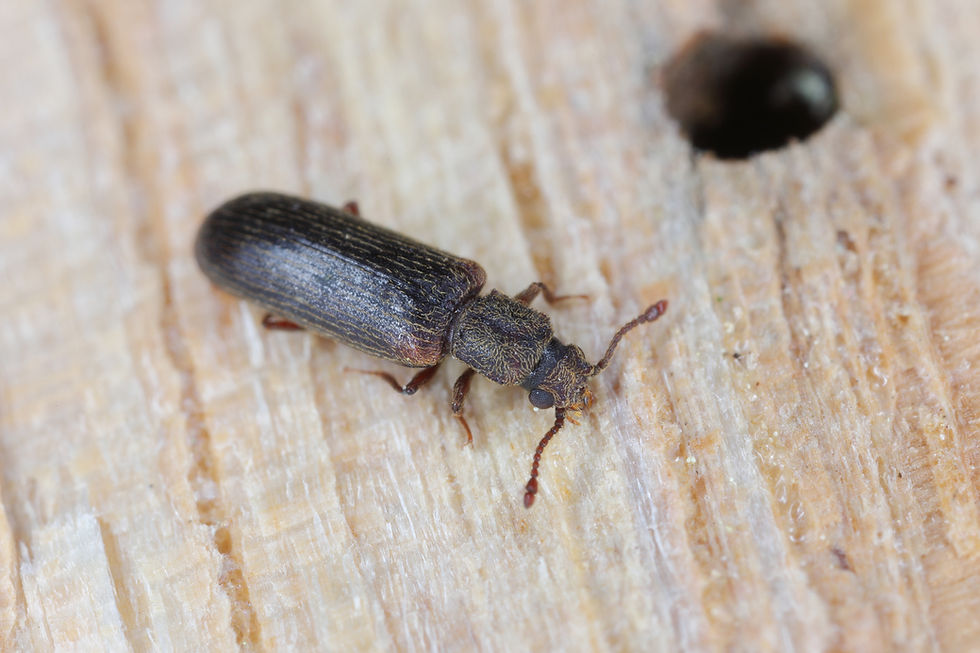
Here in Virginia, we have a number of different wood-destruction pests, including the old house borer, termites, and carpenter bees. Powderpost beetles are in that same category of pests to be wary of for their propensity of harm the wood in your home.
What Do Powderpost Beetles Look Like?
As in the picture above, many powderpost beetles have a fairly "stereotypically beetle" look about them. They are small, growing to be less than an inch in length and range in color from reddish-brown to black. They have six legs, two antennae, and hard wing covers. Powderpost beetles are strong fliers, which helps them to infest larger areas in a shorter period of time.
Powderpost beetles is actually a term that refers to a few different varieties of wood-boring beetles. The main three in Virginia are Lyctid beetles, Bostricid Beetles, and Anobiid Beetles. There are differences among the species, though the general description remains the same. One important difference, however, is that some species of these beetles prefer hardwood and some prefer softwood, changing the most likely location for them to be found.
How Can Powderpost Beetles Harm My Home?
Powderpost beetles are incredibly destructive, only being topped by termites. They will lay eggs on or in the wood, the larvae will feed on the wood and tunnel into it. As adults, they will bore into the wood and repeat the process.
Powderpost beetles are second only to termites in their ability to damage dry, seasoned wood." University of Kentucky Entomology
When present in a home, these pests will be commonly found in hardwood floors, furniture, and the structural wooden parts of your home. Once they have been boring into the wood, creating empty tunnels throughout, the pieces become structurally unsound. This could happen to joists, support beams, furniture, flooring, subflooring, or just about any other wooden surface in your home. Repair or replacement can be significantly costly.
Powderpost beetles are attracted to humidity, so crawl spaces, basements, outdoor sheds, and decks are common infestation locations.
How Can I Protect My Property From Powderpost Beetles?
These pests become active in the early spring and continue throughout the warmer months. Once cold hits, they will retreat into the wood to overwinter. As such, it's important to deal with any infestations as soon as they are identified. If you are finding tiny holes in your wood surfaces, noticing piles of fine powdery dust, or seeing the beetles themselves (often mistaken for small rust-colored grains of rice), you have a problem.
Make sure to inspect regularly, stop any leaks or poor drainage areas, and keep wood freshly painted, sealed, and repaired. Don't store firewood or fallen tree limbs against the house. If damage has occurred, replace pieces of wood that can cause structural weaknesses with treated. For damage in smaller pieces, placing items such as picture frame into a deep freeze for a week will kill any remaining beetles. In larger pieces that do not require removal, heating to 125-140°F for several hours would also be sufficient to kill beetles still inside the wood.
Professional pest control is effective against powderpost beetles, with tenting being the most effective and the most expensive. Properly applied applications will be able to disrupt current populations and discourage new populations from forming.
At Virginia Pest Pro, we're happy to answer questions, give advice, and help you keep your home pest free. Call us today!
To learn more about local Virginia pests, check our pest library and other blog posts


Comments